

Technology often feels like it arrives all at once, blurring the line between science fiction and everyday life. Features once imagined as distant possibilities now quietly power homes, vehicles, workplaces, and creative tools. Many of the most impressive advancements don’t announce themselves loudly; they integrate smoothly into routines until they feel normal. The future didn’t arrive with flashing lights or dramatic changes. It arrived gradually, reshaping daily life in ways many people don’t fully notice until they pause and look closer.
Generative AI Is Already Part of Daily Life
Generative artificial intelligence often sounds like a brand-new concept, yet it already plays a role in how people work, communicate, and create. From writing assistance and image generation to music composition and customer support, generative AI produces original content based on patterns learned from massive datasets. What once required specialized skills can now be supported by tools that respond instantly to simple prompts.
The most futuristic part isn’t speed or accuracy, but accessibility. Generative AI lowers creative barriers, helping individuals brainstorm ideas, refine language, or visualize concepts quickly. Behind the scenes, it improves recommendations, search results, and personalization across platforms. While debates continue around ethics and oversight, generative AI has quietly shifted from experimental novelty to practical utility, influencing productivity and creativity across countless industries.
Autonomous Vehicles Are Redefining Transportation
Self-driving technology once felt decades away, yet autonomous features already exist in many modern vehicles. Advanced driver-assistance systems handle tasks like adaptive cruise control, lane keeping, automatic braking, and parking assistance. While fully autonomous cars continue to develop, partial automation has already changed how people experience driving.
Autonomous systems improve safety by reacting faster than human reflexes in certain situations. They reduce fatigue on long drives and add confidence in heavy traffic. Outside personal vehicles, autonomous technology supports delivery robots, warehouse vehicles, and public transportation pilots. The transition isn’t sudden or dramatic; it’s incremental. Each update pushes transportation closer to autonomy, making futuristic mobility feel increasingly routine.
Augmented Reality Is Enhancing the Physical World
Augmented reality blends digital information with real-world environments, creating experiences that feel subtle yet powerful. AR already appears in navigation apps, interior design previews, retail shopping, and mobile gaming. By overlaying digital elements onto physical spaces, AR enhances understanding without fully replacing reality.
Retailers use AR to show how furniture fits in a room, while technicians rely on it for guided repairs. Navigation tools display directions directly onto streets through phone cameras. Unlike virtual reality, AR doesn’t remove users from their surroundings; it adds context. The technology feels futuristic because it reshapes perception, yet it operates quietly through devices people already carry every day.
Virtual Reality Is Expanding Beyond Entertainment
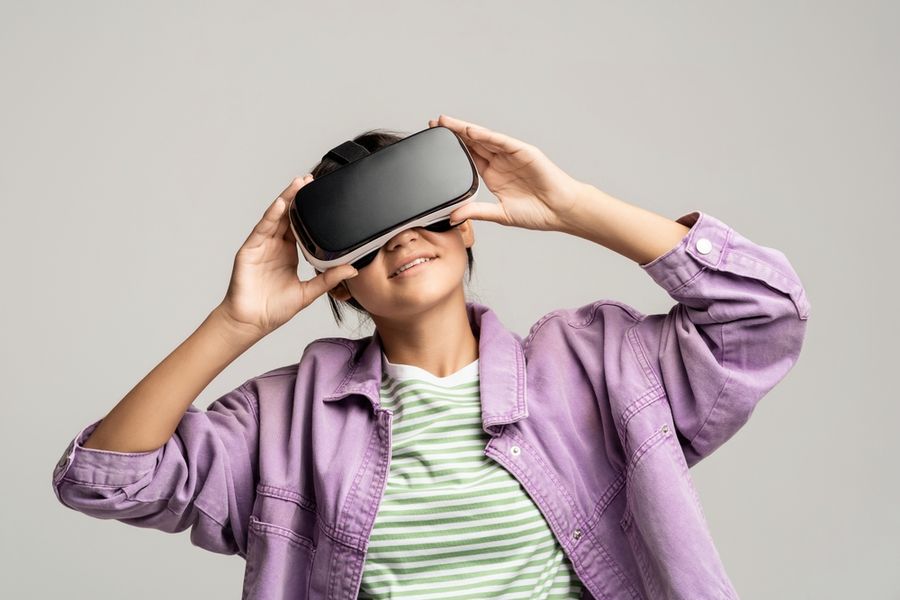
Virtual reality has moved far beyond gaming and novelty experiences. VR now supports education, training, therapy, and remote collaboration. Immersive environments allow users to practice skills, explore simulations, or attend virtual meetings with a sense of presence that traditional screens cannot replicate.
In healthcare, VR assists with pain management and physical rehabilitation. Businesses use it for employee training without real-world risk. Creative industries rely on VR to prototype spaces and experiences before physical construction. While headsets continue to evolve, the core technology already delivers value. Virtual reality feels futuristic because of immersion, yet its applications are practical, measurable, and increasingly common.
3D Printing Is Transforming Manufacturing and Creativity
3D printing once seemed limited to prototypes and hobbyists, but it now plays a role in manufacturing, healthcare, construction, and education. By building objects layer by layer, 3D printers reduce waste and enable customization at scale. Medical professionals print prosthetics, dental tools, and surgical models tailored to individual patients.
Beyond industry, 3D printing empowers creativity at home. Designers, educators, and small businesses produce tools, parts, and art without relying on mass production. Construction companies even experiment with printing building components and entire structures. The technology feels futuristic because it reimagines manufacturing itself, yet it already produces tangible results across many fields.
Smart Automation Is Quietly Running in the Background
Automation doesn’t always look like robots or dramatic machines. Often, it operates invisibly, handling scheduling, energy use, logistics, and system optimization. Smart automation adjusts lighting, climate control, inventory management, and workflows without requiring constant input.
In homes, automation manages routines that save time and energy. In workplaces, it streamlines processes and reduces errors. Algorithms handle tasks once dependent on manual oversight, freeing people to focus on decision-making and creativity. The futuristic aspect lies in autonomy, not appearance. Automation works best when it fades into the background, quietly supporting efficiency without demanding attention.
When the Future Becomes the Present
What makes modern technology feel surprising isn’t just innovation, but familiarity. Tools once imagined as distant concepts now blend seamlessly into everyday routines. Generative AI assists creativity, vehicles handle parts of driving, digital layers enhance reality, and machines build objects from code. Progress didn’t arrive overnight; it arrived gradually, step by step.
The most striking realization is that futuristic technology no longer feels intimidating. It feels practical, helpful, and often invisible. As innovation continues, the line between emerging and established trends will keep shifting. The future isn’t waiting on the horizon anymore. It’s already woven into daily life, quietly shaping how people live, work, and imagine what comes next.